Signs, 2008, Oil on Panel, 12 x 12 in.
 Nightlights I, Oil on Panel, 14 x 11 in.

Watertower Still Life, 2009, Oil on Panel, 16 x 20 in.
 Signs, 2008, Oil on Panel, 12 x 12 in.


To Make a World: George Ault and 1940s America, was at the Smithsonian American Art Museum from March 11 – September 5, 2011.
To Make a World captures a 1940s America that was rendered fragile by the Great Depression and made anxious by a global conflict. Although much has been written about the glorious triumph of the Second World War, what has dimmed over time are memories of the anxious tenor of life on the home front, when the country was far distant from the battlefields and yet profoundly at risk. The exhibition brings viewers back into the world of the 1940s, drawing them in through the least likely of places and spaces: not grand actions, not cataclysmic events, not epoch-making personalities, posters, and headlines, but silent regions where some mystery seems always on the verge of being disclosed.


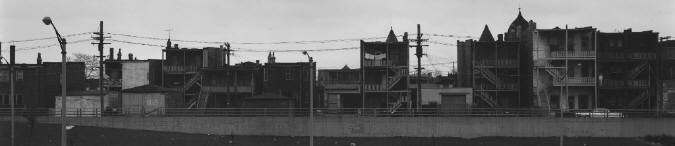


Edward Biberman was born in Philadelphia in 1904; both he and his older brother Herbert, expected to join the family garment business, wound up pursuing careers in the arts (Herbert as a writer for stage and screen). Edward began his career in Paris in the late 1920s, and subsequently settled in New York where he was included in on of the first exhibitions at the newly opened Museum of Modern Art. In 1936 he moved to Los Angeles, where he increasingly incorporated social concerns into his paintings. He also began making mural paintings and taught at the Art Center School. His social and political consciousness was heightened by the Spanish Civil War and the international rise of fascism. Even his portrait subjects, including Lena Horne and Paul Robeson, reflected his political leanings.
Biberman’s career was put on hold for five months in the early 1950s when his brother Herbert, one of the Hollywood Ten, was imprisoned for his refusal to cooperate with the House Un-American Activities Committee. The experience of living in Los Angeles during this politically charged period profoundly influenced Biberman, whose work of these years – including Conspiracy – clearly reflects the political realities of the day. Although he resigned from the Art Center School (in anticipation of dismissal for his political beliefs), he continued to teach throughout southern California. Biberman lived and worked in Los Angeles, known locally but largely ignored on the national art scene, until his death in 1986.
 White Fire Escape, 1956.


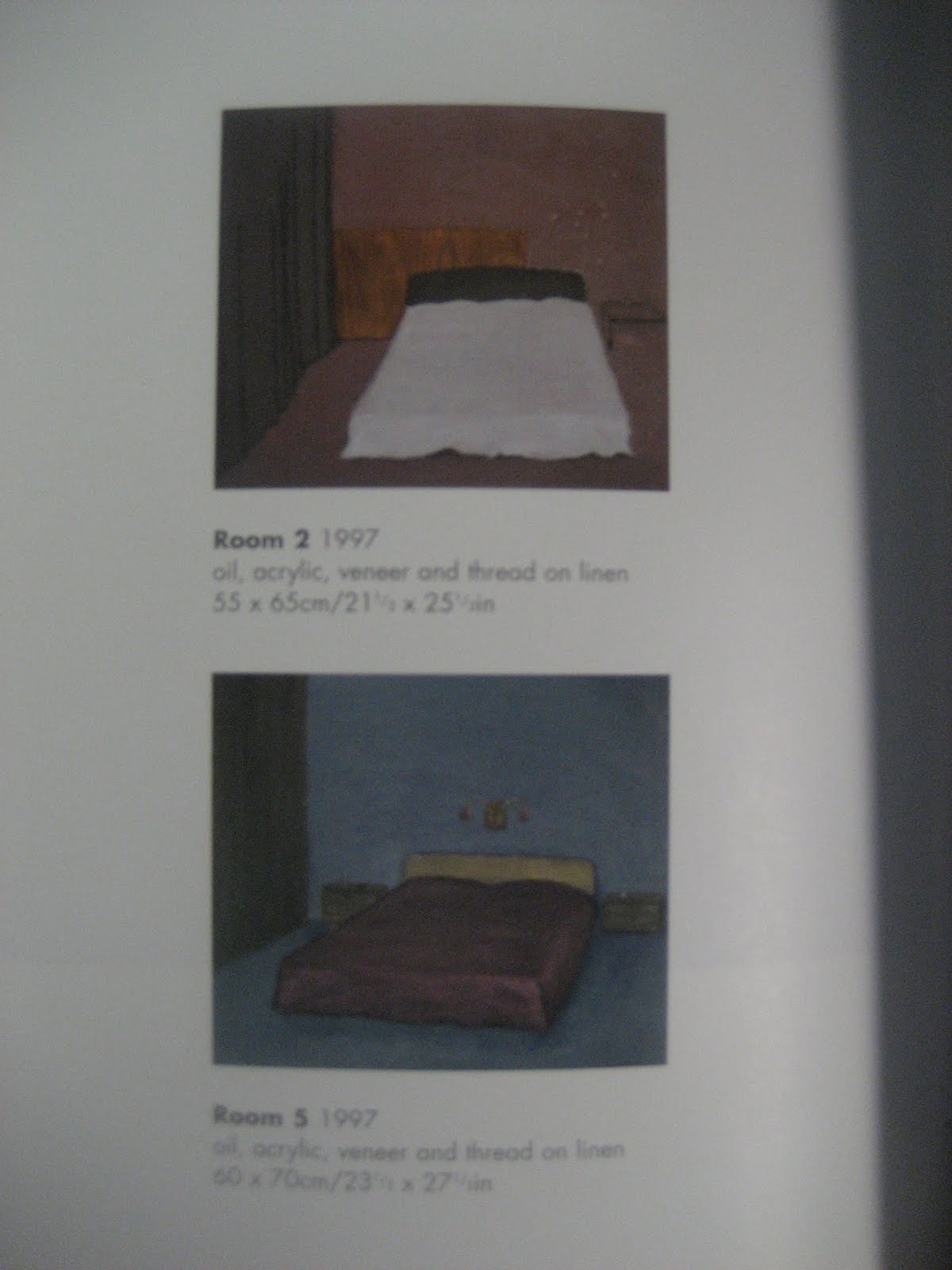


An installation view of Lois Dodd's "New Panel Paintings"
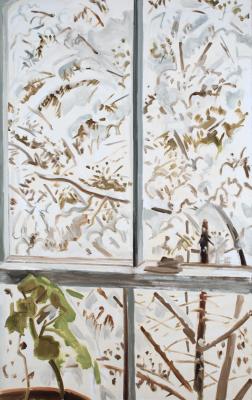
An eighty-four-year-old woman paints a view of falling snow from a window. That’s Lois Dodd.
Dodd has her ninth solo exhibition, titled New Panel Paintings, at the Alexandre Gallery in midtown Manhattan. The 24 new were were done plein air. Each painting is completed in one sitting.
Dodd paints what she sees: a green scrap of grass leading to a cottage, a yellow field bathed in sunshine, a red flower in bloom. To view a Dodd painting is to contemplate a singular moment in time. There is not fuss, but delight. Pure and simple.